

Files
Download Full Text (404 KB)
Description
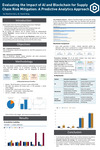
The increasing adoption of artificial intelligence (AI) in supply chain operations is transforming how organizations detect, govern, and respond to risk, raising important questions regarding digital trust, accountability, and transparency. AI models enable predictive risk assessment using large-scale logistics data. However, their outputs are often difficult to audit or independently verify. In contrast, blockchain technology provides immutable and tamper-evident records but lacks predictive capabilities. This study empirically evaluates an integrated AI-Blockchain environment using a real-world e-commerce logistics dataset (Olist Brazilian dataset, September 2016-October 2018). The analysis compares AI-only, blockchain-only, and integrated configurations across both predictive and governance dimensions. Results indicate that the integrated system improves risk detection coverage compared with AI alone, while blockchain adds governance capabilities, including tamper detection and end-to-end event traceability. The findings demonstrate that AI and blockchain address different operational failure modes, and their integration creates governance capabilities that neither technology can provide independently.
Publication Date
3-26-2026
Keywords
Artificial Intelligence, Blockchain, Supply Chain Management, Risk Mitigation, Predictive Analytics
Disciplines
Management Information Systems
Recommended Citation
Seru, Sai Neelima and Zeng, David, "Evaluating the Impact of AI and Blockchain for Supply Chain Risk Mitigation: A Predictive Analytics Approach" (2026). Annual Research Symposium. 67.
https://scholar.dsu.edu/research-symposium/67