

Files
Download Full Text (672 KB)
Description
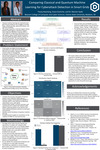
Smart grids use digital technology and automation to make electricity distribution efficient and reliable, relying on central control nodes to manage flow. If attackers compromise these nodes, they can disrupt load management, overload the system, and cause blackouts in critical locations like hospitals and factories. Classical machine learning has improved smart grid intrusion detection but struggles to handle large, unbalanced data, adversarial attacks, and real-time scalability.
This project compares a classical Support Vector Machine (SVM) against a Quantum Support Vector Machine (QSVM) to evaluate which is more effective at detecting cyberattacks versus safe signals. Both models are evaluated on accuracy, precision, and training speed and trained on the Edge-IIoTset dataset, a realistic IIoT network traffic dataset capturing attacks across devices that share industrial protocols common to smart grid environments.
Using a locally hosted simulation, the results were as follows: the classical SVM model produced 98.35% accuracy and 100% precision in 0.15s training time while its quantum counterpart gave 85% accuracy and 85% precision in 2.99s training time. Future efforts include testing both models on an actual quantum computer hosted by IBM Quantum Platform to test the effects of noise on the model performance metrics. By directly testing quantum methods against classical approaches on real attack data, this project provides students, researchers, and infrastructure defenders with practical insights into whether quantum machine learning is ready to strengthen the security of the energy systems modern society depends on.
Publication Date
2026
Recommended Citation
Kwarteng, Tracey; Dushime, Grace; and Gado, Mariam, "Comparing Classical and Quantum Machine Learning for Cyberattack Detection in Smart Grids" (2026). Annual Research Symposium. 89.
https://scholar.dsu.edu/research-symposium/89